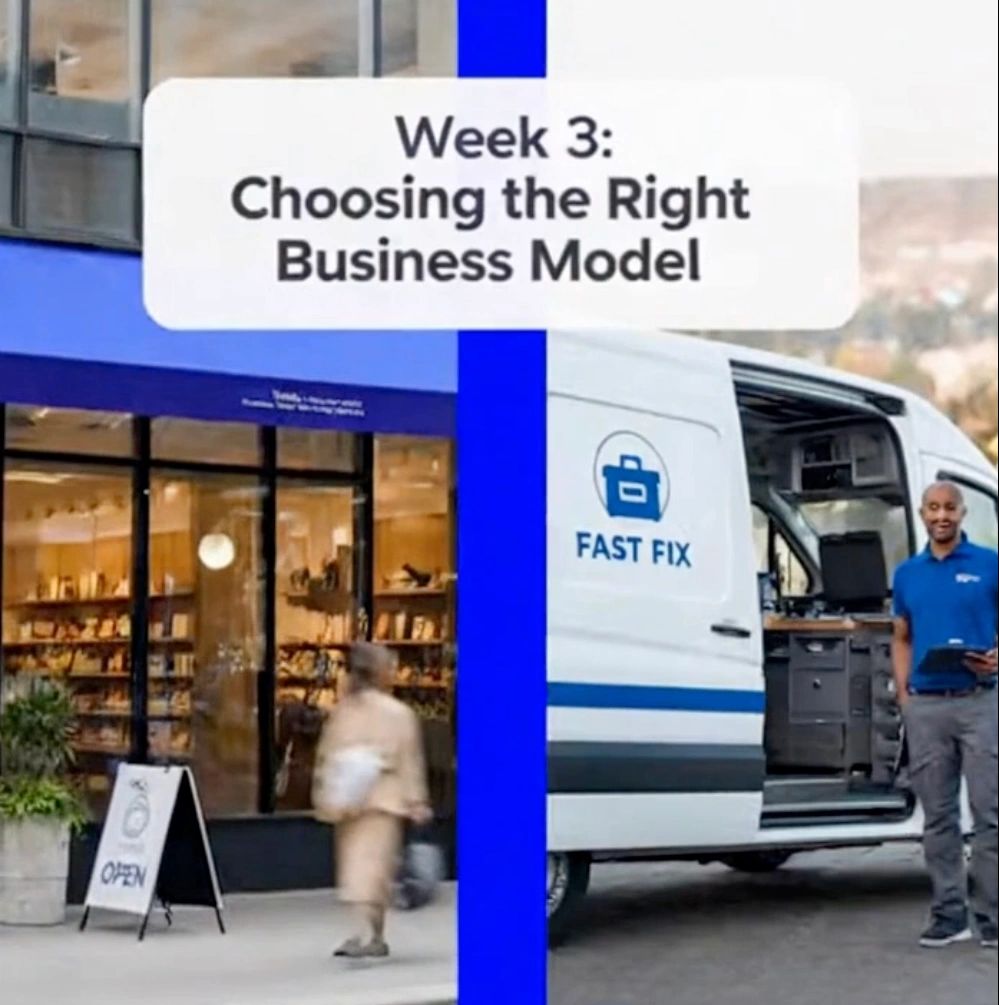
By Week 3, our group of investors had clarity on their goals and a basic understanding of the major franchise industries. The next step was to understand the operational shape of different business models.
Two businesses in the same industry can require completely different lifestyles.
Understanding the model is often more important than understanding the brand.
This week, the investors compared several core models to understand how each one shapes an owner’s daily routine.
Retail Locations: A structured, customer-facing model
Retail concepts include studios, wellness centers, education facilities, and many fitness models. Investors discovered that retail businesses tend to offer:
• Set operating hours
• A consistent, predictable environment
• Opportunities for community visibility and brand presence
• Higher startup costs due to buildouts and leases
However, they also require:
• Regular staff scheduling
• Attention to customer experience
• Ongoing local marketing
Retail works well for investors who enjoy structure and being part of the community fabric.
Mobile or Service-Based Models: Flexible, scalable, streamlined
Service-based concepts often require no storefront, which means:
• Faster ramp-up
• Lower overhead
• Ability to scale quickly across large territories
• More flexible work hours
But they typically involve:
• Managing technicians or field teams
• Route optimization
• Operational problem-solving
Investors learned that service models can be powerful for those who want simplicity and scale, but they require organized leadership.
B2B Models: Professional clients, predictable hours
B2B concepts operate Monday through Friday and often involve recurring contracts.
Investors found that B2B models typically offer:
• Higher margins
• Fewer employees
• Stable long-term client relationships
• A more predictable schedule
However, they come with a need for:
• Sales consistency
• Relationship building
• Patience during the early ramp-up
Investors with corporate backgrounds often feel naturally aligned here.
B2C Models: Consumer-facing, relationship-driven
Consumer-service models involve homeowners, children, clients, or community members. These models often require:
• Customer engagement
• Reputation management
• Community presence
They are appealing to investors who enjoy a people-oriented environment and want to be known locally.
Seasonal vs Year-Round Operations
The investors also explored how seasonality affects operations:
• Seasonal concepts can offer intense months followed by slower periods
• Year-round concepts provide steadier timelines and workloads
Neither option is better.
It simply depends on the owner’s goals and preferred schedule.
Week 3 Takeaway
This week helped investors understand that business models shape lifestyle more than industry does.
By the end of the week, each investor had clarity on which models matched their preferred way of working.
Question for you:
Do you prefer a business with set hours and a physical location, or something more flexible and scalable?